Fibromyalgia & Exercise
Moving Well with Widespread Pain — What the Evidence Says
Fibromyalgia is a complex, central sensitisation disorder characterised by widespread musculoskeletal pain, fatigue, disrupted sleep, and cognitive difficulties. While there is no cure, a growing body of evidence shows that carefully prescribed exercise is one of the most effective non-pharmacological treatments available — reducing pain, improving sleep, and meaningfully lifting quality of life. Here's how Fortify Movement & Health can help you move better and feel more like yourself.
How Exercise Helps
Exercise isn't just "good for you" with fibromyalgia — it's one of the most powerful tools available. Here are the five key mechanisms behind its benefits.
Pain Centralisation
Interrupt the pain-signal cycle
Fibromyalgia involves central sensitisation — the nervous system becomes hyper-responsive to normal inputs, amplifying pain signals. Regular aerobic exercise has been shown to down-regulate central sensitisation pathways, reducing the nervous system's over-response to pain. Over time, consistent movement can meaningfully lower widespread pain scores and increase pain tolerance.
Sleep Improvement
Restore restorative rest
Poor, unrefreshing sleep is one of the most debilitating aspects of fibromyalgia — and it feeds back into heightened pain. Exercise promotes deeper, more restorative sleep stages by regulating circadian rhythms and reducing cortisol. Studies consistently show improved sleep quality and duration in people with fibromyalgia who engage in regular, paced exercise programs.
Autonomic Function
Regulate the stress response
People with fibromyalgia often show dysregulation of the autonomic nervous system, contributing to heightened stress responses, heart rate variability changes, and fatigue. Aerobic exercise training helps recalibrate autonomic balance — improving heart rate variability, reducing sympathetic overdrive, and supporting a calmer, more regulated nervous system response to daily demands.
Quality of Life
Reclaim function and wellbeing
Beyond pain and sleep, fibromyalgia significantly impacts mood, social participation, and daily function. Exercise has been shown to reduce anxiety and depression scores, improve cognitive clarity (often called 'fibro fog'), and increase overall functional capacity. Participants in supervised exercise programs consistently report greater confidence in managing their condition.
Fatigue Management
Build energy without crashing
Post-exertional malaise — the worsening of symptoms after physical activity — is a real concern in fibromyalgia. But when exercise is introduced at the right dose and progressed carefully, it gradually builds physical capacity and reduces fatigue over time. A paced, individualised program avoids the 'boom-bust' cycle and instead builds a sustainable foundation for daily energy.
Why "just exercise more" isn't the answer
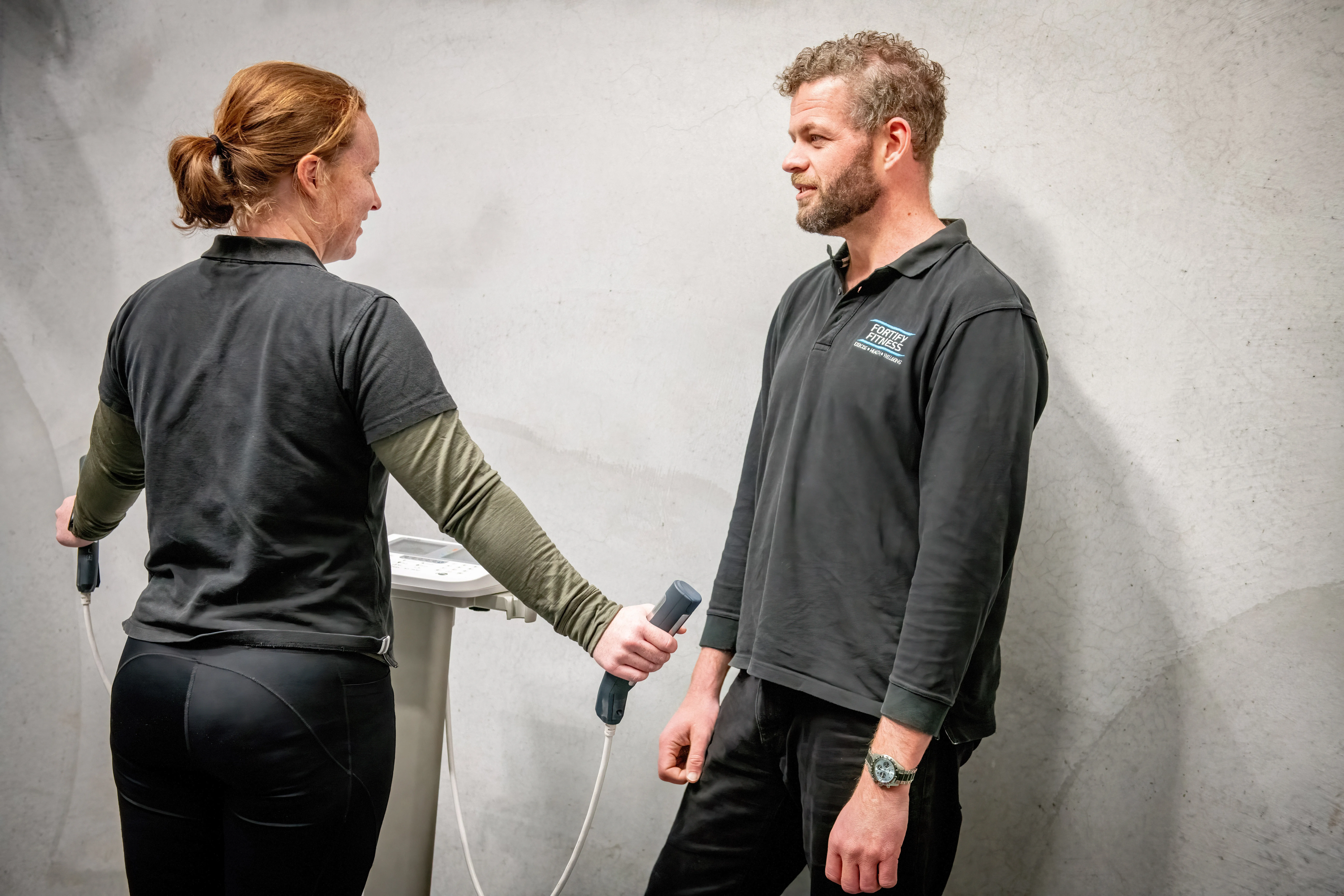
Unsupervised or poorly dosed exercise can worsen fibromyalgia symptoms — which is why so many people with the condition have tried exercise and stopped. The key difference is working with an Accredited Exercise Physiologist (AEP) who understands central sensitisation, pacing strategies, and how to progress load safely. At Fortify Movement & Health, every program is individually designed and monitored.
What to Aim For
Evidence-based exercise guidelines for fibromyalgia — designed to be gentle, progressive, and adapted to your individual symptom pattern. Pacing is as important as the exercise itself. Post-exertional malaise is real; below you'll find practical guidance to help you build capacity without triggering symptom flares.
Aerobic Exercise
Gentle cardiovascular movement
| Frequency | 2–3 days per week (building toward 3–5 over time) |
| Duration | Start at 10–20 minutes; progress slowly toward 30+ minutes |
| Intensity | Gentle to moderate — RPE 9–13 (light to somewhat hard); avoid overexertion |
| Mode | Walking, aquatic exercise, cycling, gentle dance, tai chi |
| Pacing | Shorter sessions more often; stop before fatigue sets in |
Resistance Training
Gentle strength-based movement
| Frequency | 2 days per week on non-consecutive days |
| Duration | 20–30 minutes; 1–2 sets of 8–12 repetitions per exercise |
| Intensity | Light to moderate load; avoid pushing to failure; prioritise form |
| Mode | Resistance bands, light weights, bodyweight, hydrotherapy |
| Pacing | Leave 1–2 repetitions 'in reserve'; rest fully between sets |
Flexibility & Relaxation
Daily movement for recovery and mobility
| Frequency | Daily or most days of the week |
| Duration | 5–10 minutes; gentle static stretches held 20–30 seconds |
| Intensity | Mild tension only — never stretch to the point of discomfort or pain |
| Mode | Gentle yoga, Pilates-based movement, guided stretching |
| Pacing | Ideal for rest days; supports recovery and joint mobility |
These are general guidelines drawn from current evidence. Individual programming should account for your current symptom burden, flare patterns, and daily activity levels. An AEP at Fortify will personalise your program and review it regularly.
Staying Safe
Exercise is safe and highly recommended for fibromyalgia — but how you approach it matters enormously. These four principles help keep you moving forward without unnecessary setbacks.
Incremental Loading
One of the most important principles when exercising with fibromyalgia is 'start low, go slow'. Beginning with very short, gentle sessions — even 5–10 minutes — and increasing duration and intensity by no more than 10% per week helps the nervous system adapt without triggering a flare. Your AEP at Fortify will build your program in stages, reassessing regularly to ensure progress is sustainable.
Symptom Tracking
Keeping a simple daily log of pain levels, fatigue, sleep quality, and mood gives your exercise physiologist invaluable data. Patterns in your symptom diary help identify which activities, times of day, or intensities suit you best — and which ones to modify. Fortify's AEPs use this information to fine-tune your program and spot early signs of overload before they become a setback.
Rest–Activity Balance
The 'boom-bust' cycle — overdoing activity on a good day and crashing afterward — is a common and counterproductive pattern in fibromyalgia. Pacing strategies help you spread activity evenly across the week, take planned rest breaks, and set an 'activity ceiling' to protect your recovery. Building rest into your program is as clinically important as the exercise itself.
Multidisciplinary Support
Exercise physiology is most effective as part of a broader care team. Fortify Movement & Health works collaboratively with GPs, rheumatologists, pain specialists, psychologists, and physiotherapists. If you're accessing a Medicare Chronic Disease Management (CDM) plan, you may be eligible for up to five Medicare-rebated sessions per year with our AEPs — making evidence-based support more accessible.
You don't have to push through pain
A key message from the evidence: effective exercise for fibromyalgia does not mean exercising through pain. Gentle, consistent movement that you can sustain over time produces far better outcomes than intense sessions that trigger flares. Fortify's AEPs are trained in pain neuroscience and will work with you — not against your body.
Download This Resource
Save or print this clinical summary to share with your GP, rheumatologist, or pain specialist. Use your browser's print function to export a clean PDF.
Download PDFReady to Move Forward?
Speak with an Accredited Exercise Physiologist at Fortify Movement & Health. We understand fibromyalgia, central sensitisation, and how to build a program that works with your body — not against it.
Sources & References
This page is for general information only and does not constitute medical advice. Always consult a qualified health professional before commencing an exercise program. Content draws on resources from Exercise is Medicine Australia and Exercise Right (ESSA).
- Exercise is Medicine Australia (EIMA). (2023). Fibromyalgia and Exercise. Exercise is Medicine Australia. Retrieved from exerciseismedicine.com.au
- Exercise Right. (2023). Exercise Right for Fibromyalgia — clinical fact sheet. Exercise & Sports Science Australia (ESSA). Retrieved from exerciseright.com.au
- Häuser, W., Klose, P., Langhorst, J., Moradi, B., Steinacker, J., Schiltenwolf, M., & Busch, A. (2010). Efficacy of different types of aerobic exercise in fibromyalgia syndrome: A systematic review and meta-analysis of randomised controlled trials. Arthritis Research & Therapy, 12(3), R79.
- Bidonde, J., Busch, A. J., Bath, B., & Milosavljevic, S. (2014). Exercise for adults with fibromyalgia: An umbrella systematic review with synthesis of best evidence. Current Rheumatology Reviews, 10(1), 45–79.
- Macfarlane, G. J., Kronisch, C., Dean, L. E., Atzeni, F., Häuser, W., Fluß, E., … Jones, G. T. (2017). EULAR revised recommendations for the management of fibromyalgia. Annals of the Rheumatic Diseases, 76(2), 318–328.
- Exercise & Sports Science Australia (ESSA). (2020). ESSA position statement on exercise and fibromyalgia. ESSA Clinical Practice Standards.
Content reviewed by Accredited Exercise Physiologists at Fortify Movement & Health, Altona North VIC. Last updated 2025.