Osteoarthritis & Exercise
Joint Changes, Symptom Relief & Structural Modification Through Movement
Osteoarthritis (OA) is the most common musculoskeletal condition worldwide, characterised by the progressive breakdown of articular cartilage, subchondral bone remodelling, and associated joint space narrowing. It most frequently affects the knees, hips, hands, and spine — but OA isn't purely a "wear and tear" story. Research now confirms that well-prescribed exercise is one of the most effective interventions available: it reduces pain, improves joint stability, builds protective muscle strength, and can even slow structural deterioration. At Fortify Movement & Health, evidence-based exercise physiology is at the core of OA management.
How Exercise Helps
Exercise is the single most evidence-supported intervention for osteoarthritis — here's why movement is medicine for OA-affected joints.
Pain Reduction
Natural analgesic effects of movement
Regular exercise stimulates endogenous pain-modulating systems, reducing central sensitisation and locally decreasing inflammatory mediators within the joint. Multiple systematic reviews confirm that structured exercise reduces OA pain scores by 20–40% — often comparable to non-steroidal anti-inflammatory drugs (NSAIDs), without the side effects. Both aerobic and resistance training produce meaningful pain relief.
Muscle Strength & Joint Stability
Protect and offload the joint
Weakness in the muscles surrounding an OA-affected joint directly increases compressive loading on cartilage. Targeted resistance training builds the quadriceps, gluteals, and hip stabilisers for knee OA, and the rotator cuff and scapular stabilisers for shoulder OA — redistributing load away from damaged tissue and significantly reducing pain with daily activities.
Cartilage Health
Exercise as a structural modifier
Cartilage is avascular — it relies on cyclical joint loading (compression and decompression during movement) for nutrient diffusion. Appropriate exercise maintains this nutritive cycle, promotes chondrocyte activity, and emerging evidence suggests resistance training may attenuate cartilage volume loss over time. Inactivity, by contrast, accelerates cartilage degradation.
Functional Capacity
Better movement, better life
OA commonly limits walking distance, stair climbing, rising from chairs, and sleep quality. Progressive exercise programming — starting at an appropriate baseline and advancing systematically — restores functional capacity through improved neuromuscular control, range of motion, and muscular endurance. Outcomes include faster walking speed, reduced stiffness, and greater independence.
Weight Management
Every kilogram matters for joint load
For weight-bearing joints (knees and hips), body weight exerts a force of 3–6 times across the joint during walking. A 5% reduction in body weight can reduce knee-joint load substantially, slowing structural progression and reducing pain. Exercise — especially combined with dietary strategies — is the cornerstone of weight management for people with OA.
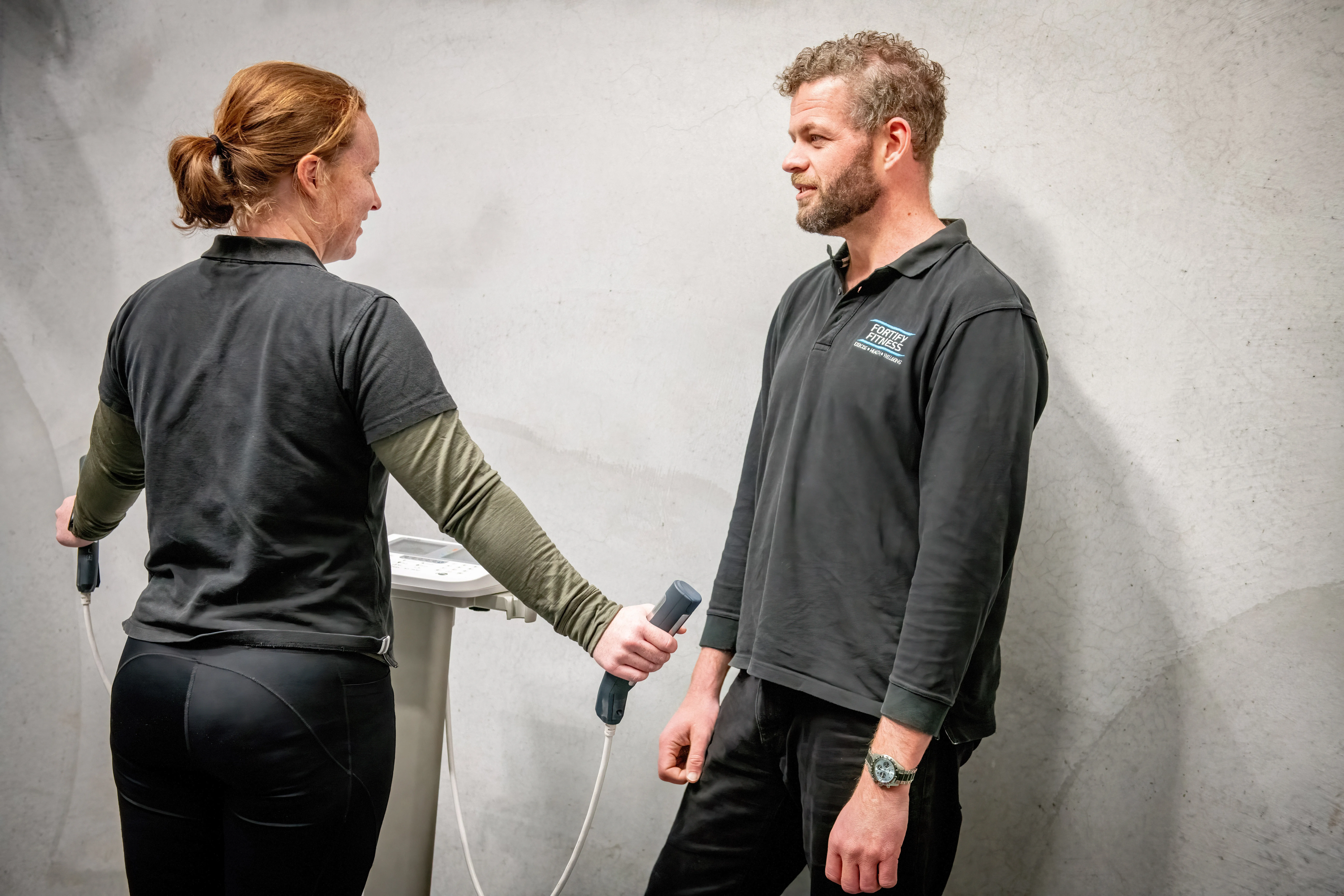
Exercise beats passive treatments for long-term OA outcomes
Clinical guidelines from Osteoarthritis Research Society International (OARSI), Exercise & Sports Science Australia (ESSA), and the National Institute for Health and Care Excellence (NICE) all recommend exercise as a core, first-line treatment for OA — ahead of surgery, injections, and many medications. A program designed by an Accredited Exercise Physiologist (AEP) ensures the right exercise, at the right dose, for each affected joint.
What to Aim For
Site-specific, evidence-based exercise progressions for OA — including resistance, aerobic, and flexibility targets tailored to joint location and individual capacity.
Resistance Training
Builds muscle to protect and offload OA-affected joints
| Frequency | 2–3 days per week (non-consecutive) |
| Duration | 30–45 minutes per session |
| Intensity | Moderate load — 8–15 reps, 2–3 sets; progress load by ~5–10% when 15 reps feel easy |
| Mode | Leg press, seated knee extension, step-ups, wall squats, hip abduction, aquatic resistance |
| Load optimisation | Avoid high-impact loading during flares; favour range-of-motion exercises initially |
Aerobic Exercise
Low-impact cardiovascular movement for pain relief and function
| Frequency | 3–5 days per week |
| Duration | 20–45 minutes per session; accumulate in 10-minute bouts if needed |
| Intensity | Moderate (RPE 11–14); low-impact modes recommended for knee/hip OA |
| Mode | Walking, cycling (stationary or outdoor), swimming, water aerobics, elliptical trainer |
| Progression | Increase duration before intensity; aim for 150 min/week moderate-intensity as a long-term goal |
Flexibility & Mobility
Reduce stiffness and maintain joint range of motion
| Frequency | Daily or ≥5 days per week |
| Duration | 2–4 repetitions, hold 20–30 seconds per stretch |
| Intensity | Comfortable end-range stretch — no pain, mild tension only |
| Mode | Static stretching, gentle yoga, hydrotherapy, tai chi (also improves balance) |
| Benefit | Reduces morning stiffness, improves joint ROM, supports functional tasks like dressing and stairs |
These targets are based on current OARSI and ESSA guidelines. Individual programming depends on the joints affected, OA severity, co-existing conditions, and current fitness level. An AEP at Fortify will tailor your prescription to your specific needs.
Staying Safe
Exercise is safe and beneficial for virtually everyone with OA — the key is choosing the right type, dose, and progression strategy.
Joint Protection
Not all exercise is equal for OA. High-impact activities such as running on hard surfaces or heavy-impact jumping can aggravate inflamed joints, especially during flare-ups. Low-impact options — hydrotherapy, cycling, swimming, and elliptical training — deliver the same cardiovascular and strength benefits with significantly less joint stress. Your AEP will match exercise selection to the specific joints affected and their current status.
Activity Pacing
Boom-bust cycles — doing too much on a good day and paying for it the next — are a common trap for people with OA. Effective pacing involves planning activity in manageable doses, using pain levels (not just motivation) as a guide, and building a consistent daily baseline rather than sporadic intense efforts. Pacing is a learnable skill and a key component of an AEP-prescribed OA program.
Weight Management
For knee and hip OA, maintaining a healthy body weight is one of the most powerful structural interventions available. Even a modest 5–10% body weight reduction can meaningfully reduce joint compressive load, decrease pain, and slow radiographic progression. Exercise physiology combined with referral to a dietitian provides a comprehensive approach that no single modality achieves alone.
Flare-Up Management
OA symptoms fluctuate. During a flare — characterised by increased warmth, swelling, or severe pain — the appropriate response is not complete rest but a temporary reduction in exercise intensity and load. Range-of-motion exercises, hydrotherapy, and gentle walking maintain function without exacerbating inflammation. Your AEP will provide a flare management protocol as part of your overall program.
Monitoring Progression
Regular reassessment is essential for safe OA management. Fortify uses validated outcome measures — including the KOOS (Knee injury and Osteoarthritis Outcome Score), HOOS, and functional capacity tests — at baseline and at regular intervals to objectively track pain, function, and strength improvements. This keeps your program on target and provides meaningful evidence of progress over time.
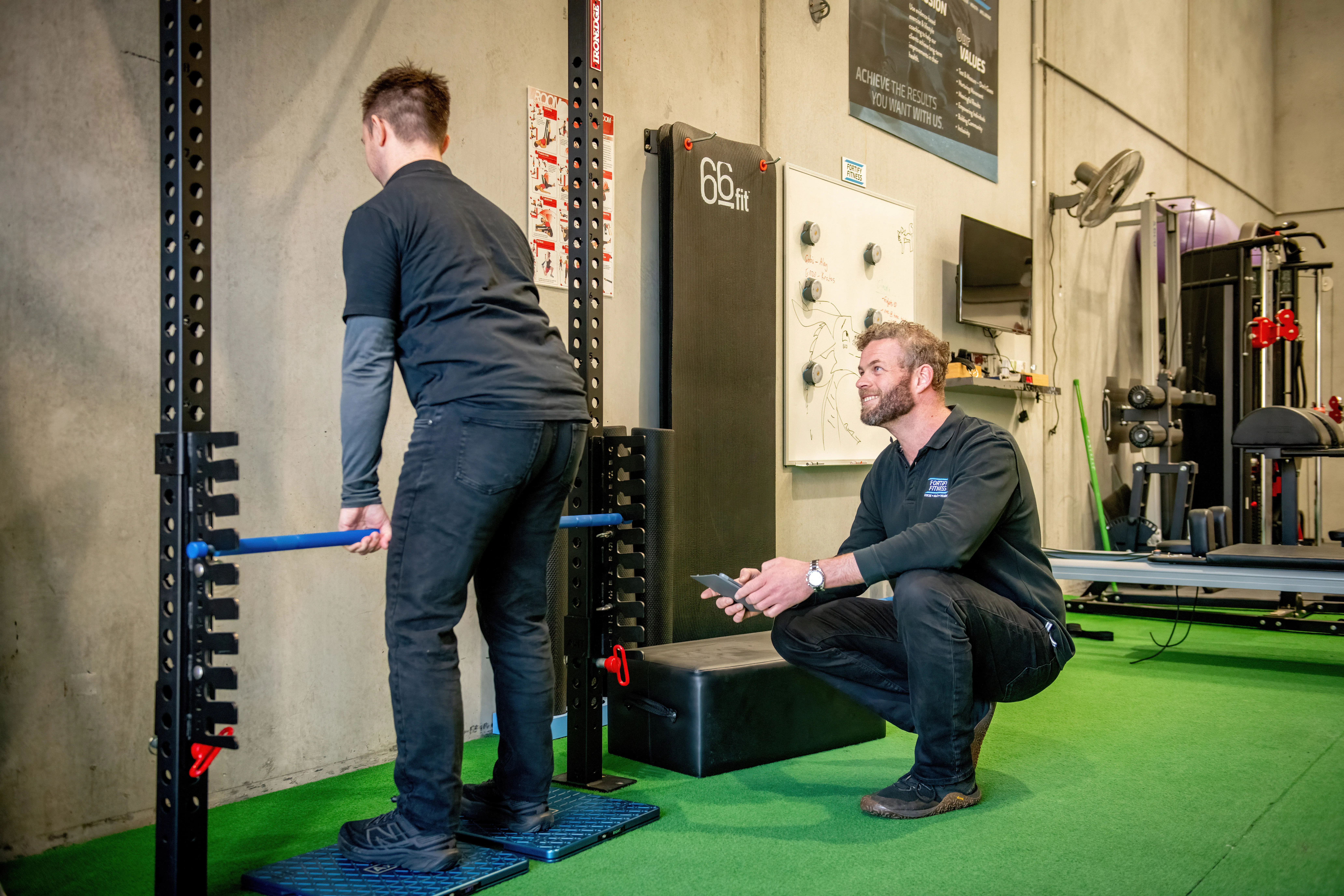
Working with your healthcare team
Fortify Movement & Health works closely with GPs, orthopaedic surgeons, physiotherapists, and rheumatologists. We can be accessed via a Medicare Chronic Disease Management (CDM) plan, NDIS funding, DVA, or private health insurance — making evidence-based OA management accessible for a wide range of clients.
Download This Resource
Save or print this clinical summary to share with your GP, rheumatologist, physiotherapist, or orthopaedic specialist. Use your browser's print function to export a clean PDF — the Fortify logo is included.
Download PDFReady to Move with Less Pain?
Speak with an Accredited Exercise Physiologist at Fortify Movement & Health. The team will assess your affected joints, strength, and functional capacity to build a program that helps you move better and hurt less — at every stage of OA.
Sources & References
This page is for general information only and does not constitute medical advice. Always consult a qualified health professional before commencing or modifying an exercise program.
- Bannuru, R. R., et al. (2019). OARSI guidelines for the non-surgical management of knee, hip, and polyarticular osteoarthritis. Osteoarthritis and Cartilage, 27(11), 1578–1589.
- Fransen, M., et al. (2015). Exercise for osteoarthritis of the knee: A Cochrane systematic review. British Journal of Sports Medicine, 49(24), 1554–1557.
- Fransen, M., et al. (2014). Exercise for osteoarthritis of the hip. Cochrane Database of Systematic Reviews, (4), CD007912.
- Exercise & Sports Science Australia (ESSA). (2020). Clinical exercise practice standards for musculoskeletal conditions. ESSA Position Statement.
- Felson, D. T. (2021). Osteoarthritis: New insights, part 2. Treatment approaches. Annals of Internal Medicine, 133(9), 726–737.
- National Institute for Health and Care Excellence (NICE). (2022). Osteoarthritis in over 16s: Diagnosis and management. NICE Guideline NG226.
- Quicke, J. G., Foster, N. E., Thomas, M. J., & Holden, M. A. (2015). Is long-term physical activity safe for older adults with knee pain? A systematic review. Osteoarthritis and Cartilage, 23(9), 1445–1456.
Content reviewed by Accredited Exercise Physiologists at Fortify Movement & Health, Altona North VIC. Last updated 2025.